The Colorful Foundation: Understanding Glass Bead Sand
17 . ديسمبر, 2025
Glass bead sand is not naturally formed sand; it is a granular material made from glass through special processing. Its appearance consists of irregular particles of various sizes and shapes, available in a rich spectrum of colors. In addition to common transparent particles, there are various colored sand in glass options, providing limitless creative possibilities. The uses of glass bead sand are extensive. In the industrial sector, it is commonly used for surface matte finishing of metal products like stainless steel, effectively cleaning molds, removing burrs, and playing a significant role in sandblasting treatments for medical devices, textile machinery, and various hardware products. In the arts and crafts field, glass bead sand is an ideal material for making sand paintings, decorative bottles, resin crafts, and colored road markings. Its particles can embed tightly, creating unique textures and visual effects. Due to the inherent properties of glass, glass bead sand generally has good chemical stability and durability. Choosing high-quality glass bead sand means selecting a pure, uniform, and safe material that can deliver satisfying results, whether for professional surface treatment or creative DIY projects.
Dazzling Visuals: Exploring the Charm of Colored Sand in Glass
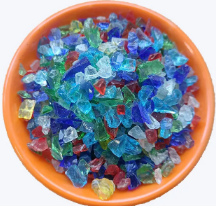
If you seek stronger visual impact and artistic expression, then colored sand in glass is the perfect choice. Colored sand in glass is based on glass bead sand, with safe, non-toxic mineral pigments added to present various bright, long-lasting colors. From soft pastels to vivid fluorescents, a complete color spectrum is available to meet the color needs of any design scheme. Colored sand in glass greatly expands application scenarios. In landscape design, it can be used for paving park paths and playground surfaces, being both safe and aesthetically pleasing. In commercial displays and festive decorations, using colored sand in glass to create patterns or fill containers can quickly set the atmosphere. For home users, making creative photo frames, decorating plant pots, or even using it as aquarium substrate (selecting products specifically designed for aquariums) can add personalized color to living spaces. Unlike ordinary dyed sand, the color in colored sand in glass is fused within the glass matrix, making it fade-resistant, non-peeling, and durable. Whether for large-scale urban beautification or creating delicate crafts, colored sand in glass provides a stable, vibrant color solution.
An Eco-Friendly New Choice: Understanding the Applications of Crushed Glass Sand
Crushed glass sand, as the name suggests, is a product obtained by processing recycled waste glass (such as bottles, jars, window glass) through crushing, washing, and screening. It is a typical "waste-to-resource" eco-friendly material, giving new life to waste glass. Crushed glass sand retains the hardness, wear resistance, and corrosion resistance of glass, while the particle edges are processed to be relatively smooth. Its main application areas include: as a construction material, partially replacing natural sand and gravel in making permeable bricks, glass asphalt, etc.; as an industrial abrasive for cleaning and surface treatment; and as a filler in chemical or composite materials. In the art and decoration field, the slightly rugged texture of crushed glass sand and the subtle color variations from different recycled sources are also favored by some designers. Using crushed glass sand is not only cost-effective but, more importantly, it responds to the call for a circular economy, reducing landfill waste and the extraction of natural sand resources. It is a choice that carries environmental responsibility. For businesses and projects focused on sustainable development, crushed glass sand is a versatile material that combines practical value with environmental significance.
The Fusion of Art and Craft: Experiencing the Creation of Fire and Sand Glass
Fire and sand glass is a broad term describing a category of creative techniques that combine glass (sand) with thermal processing (fire). This includes methods such as fused glass (heating glass bead sand or glass pieces in a kiln to melt and shape them), lampworking (shaping glass rods by locally heating them with a torch), and sand casting (pouring molten glass into sand molds to form shapes). In this process, glass bead sand often serves as the base material. For example, in kiln casting, artists layer different colors of colored sand in glass in molds, which are then heated in a kiln. The high temperature causes the glass particles to melt, fuse, and ultimately form a solid, colorful glass artwork. This process embodies the true meaning of fire and sand glass. It is a technique that demands skill and creativity, resulting in unique textures, rich layers, and unpredictable color blends. Products made through fire and sand glass techniques, such as decorative panels, jewelry, tableware, and art pieces, possess a distinct artistic charm and collectible value. For artisans and artists, mastering the techniques of fire and sand glass means mastering a language of expression that transforms light, color, and form.
Choosing the right glass sand product is crucial for project success. We specialize in providing a full range of high-quality glass bead sand and related products. Our glass bead sand is an irregular granular material composed of small particles that can be embedded into glass products, available in various shapes. It includes not only transparent particles but also vibrant colored sand in glass particles. We strictly control the raw materials and production processes to ensure the purity, uniformity, and safety of our products. Our crushed glass sand is made from selected recycled glass, undergoing rigorous cleaning and processing to ensure it is free of impurities and safe for use. We understand the needs of different industries. For industrial surface treatment, we provide products with specific hardness and particle sizes. For art and decoration, we offer a rich color palette and various particle specifications. Our expertise can also support your explorations in fire and sand glass creation, providing suitable base materials and technical advice. We are more than just a supplier; we are a solution partner dedicated to helping you achieve the best results, whether in manufacturing, creative design, or environmental projects.
Ready to add a unique glow and texture to your project? Stop searching for mediocre materials. Whether you need versatile glass bead sand for industrial finishing, dazzling colored sand in glass for decorative arts, eco-friendly crushed glass sand for sustainable construction, or materials to explore the art of fire and sand glass, we have the perfect product for you.Visit our website now to browse our complete product catalog. Explore the physical samples and color cards of our glass bead sand, learn about the technical specifications and application cases of our crushed glass sand, and get inspired by stunning works of fire and sand glass. Contact our sales team for a personalized quote, request free samples for testing, or consult with our technical experts about the most suitable product for your specific application.Choose a partner that values quality, innovation, and service. Let the endless possibilities of glass sand transform your ideas into reality. Click to contact us and start your journey of creation with the finest glass sand.
Glass Sand FAQs
What is the main difference between glass bead sand and natural sand?
Glass bead sand is man-made from glass, typically resulting in more uniform particles, brighter colors, and higher purity. It is harder, more wear-resistant, and chemically stable. Natural sand is sourced from rivers or mines, with varying compositions (like silica sand), and its color and purity are less controllable. Glass bead sand is often preferred for applications requiring specific aesthetics, consistency, or performance.
Is colored sand in glass safe for children's crafts or aquarium use?
For general crafts, high-quality colored sand in glass that uses non-toxic, fused pigments is generally safe. However, always check the product specifications and ensure it is labeled as non-toxic. For aquarium use, it is crucial to select products specifically manufactured and certified as aquarium-safe, as some pigments or coatings might leach into the water. Regular craft sand is not suitable for aquariums.
What are the advantages of using crushed glass sand over traditional sand?
Using crushed glass sand offers several advantages: 1) Environmental: It recycles waste glass, reducing landfill and resource extraction. 2) Performance: It can be harder and more angular, providing good interlock in certain applications like filtration or terrazzo. 3) Aesthetics: It offers a unique, sparkling appearance. 4) Consistency: It can be processed to more uniform sizes than some natural sands.
Can I use ordinary glass bead sand for fire and sand glass kiln work?
Not all glass bead sand is suitable. For kiln-fusing (fire and sand glass), you need glass sand specifically formulated to have a compatible Coefficient of Expansion (COE), such as COE 90 or COE 96. Using incompatible glass can cause cracking during heating or cooling. Always purchase glass sand labeled for fusing or kiln work from reputable art glass suppliers.
How should I store glass bead sand and crushed glass sand?
Store in a cool, dry place in sealed containers or heavy-duty bags to prevent moisture absorption and contamination. Keep different colors and types separated. For industrial bulk storage, ensure the area is clean and protected from the elements. Proper storage maintains the material's quality and prevents clumping.