- Afrikaans
- Albanian
- Arabic
- Belarusian
- Bengali
- Czech
- Danish
- Dutch
- English
- Finnish
- French
- Galician
- German
- Greek
- Hebrew
- Hungarian
- Indonesian
- irish
- Italian
- Japanese
- Javanese
- kazakh
- Khmer
- Rwandese
- Korean
- Kyrgyz
- Lao
- Latin
- Latvian
- Lithuanian
- Malay
- Maltese
- Mongolian
- Myanmar
- Norwegian
- Persian
- Polish
- Portuguese
- Romanian
- Russian
- Serbian
- Slovak
- Spanish
- Swedish
- Tagalog
- Thai
- Turkish
- Ukrainian
- Vietnamese
- Welsh
Soil stabilization—improving the strength, durability, and load-bearing capacity of weak soils—is critical for construction projects like roads, foundations, and embankments. Among the most effective and sustainable stabilizers is fly ash, a byproduct of coal combustion that transforms problematic soils (e.g., clay, silt) into stable, workable substrates. Shijiazhuang Baifeng Mining Co.,Ltd, situated in Lingshou County’s mineral-rich mountains (a top non-metal production hub in China), has specialized in processing high-quality industrial minerals—including coal fly ash—since 2008. With a 5,000-square-meter factory, 10 million RMB investment, 200 skilled employees, and 20 R&D quality control experts, the company delivers premium fly ash tailored for soil stabilization needs. As a trusted partner for wholesalers supplying construction firms, road contractors, and geotechnical engineering companies, Baifeng ensures consistent quality and scalable bulk supply—making its coal fly ash solutions a top choice for large-scale infrastructure projects. This article explores how fly ash enhances soil stabilization and why Baifeng’s products excel for wholesale clients seeking performance, cost savings, and sustainability.
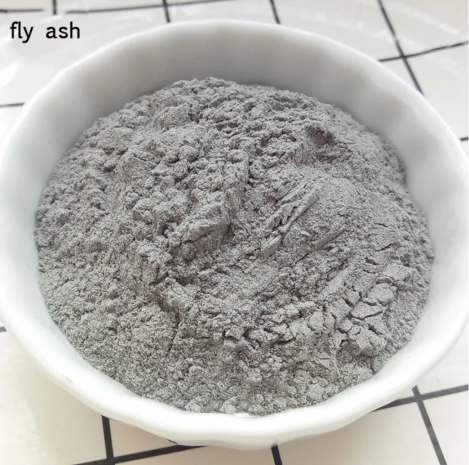
How Fly Ash Improves Soil Stability
- Pozzolanic Reaction for Strength Gain: Fly ash’s key advantage in soil stabilization lies in its pozzolanic properties—when mixed with water and soil’s natural lime (calcium hydroxide), it forms calcium silicate hydrate (CSH), a cementitious compound that binds soil particles together. This reaction increases soil compressive strength by 50-100% within 28 days, turning weak clay soils into stable substrates for roads or foundations. Baifeng’s coal fly ash is processed to remove impurities (e.g., unburned carbon), ensuring a high pozzolanic activity index (PAI ≥85%) that accelerates strength gain. A wholesaler supplying Asian road construction firms reported that Baifeng’s fly ash-stabilized soil met highway load standards 30% faster than traditional lime-stabilized soil, cutting project timelines.
- Reduced Soil Plasticity & Shrinkage: Clay soils, known for high plasticity (swelling when wet, shrinking when dry), often cause cracks in structures. Fly ash replaces part of the soil’s clay fraction, lowering plasticity index (PI) by 30-40% and reducing shrinkage by 25-35%. This makes the soil less prone to volume changes, critical for long-term infrastructure durability. Baifeng’s R&D team optimizes coal fly ash particle size (10-100μm) to ensure uniform mixing with soil, preventing clumping and ensuring consistent stability. A wholesaler serving European geotechnical firms noted that fly ash from Baifeng reduced soil shrinkage cracks in residential foundations by 60%, minimizing post-construction repairs.
Product Specifications: Fly Ash for Soil Stabilization
|
Product Category |
Baifeng Specifications |
Wholesale Value & Market Appeal |
Ideal Applications |
|
Coal Fly Ash (Class F) |
SiO₂ + Al₂O₃ + Fe₂O₃ ≥70%; carbon content <5%; fineness (45μm sieve retention) <15%; moisture <10%; PAI ≥85% |
Road base stabilization, embankments, low-load foundations; high pozzolanic activity; cost-effective |
Highway subgrades, rural road construction, landfill liners |
|
Coal Fly Ash (Class C) |
SiO₂ + Al₂O₃ + Fe₂O₃ ≥50%; lime content ≥15%; carbon content <3%; fineness (45μm sieve retention) <10%; moisture <8%; PAI ≥90% |
High-strength stabilization, heavy-load foundations, industrial sites; faster strength gain; self-cementing |
Industrial facility foundations, port embankments, high-traffic roadways |
|
Modified Fly Ash (Soil-Specific) |
Customizable particle size (10-100μm); carbon content <2%; blended with lime (5-10%) for clay soils; moisture <8% |
Tailored for problematic soils (e.g., high-plasticity clay); no extra additive needed; saves mixing time |
Residential construction on clay soils, slope stabilization, pipeline trenches |
Sustainability & Cost Benefits of Fly Ash
- Eco-Friendly Byproduct Utilization: Fly ash is a recycled byproduct—using it for soil stabilization diverts millions of tons from landfills annually, reducing environmental impact. Unlike traditional stabilizers (e.g., Portland cement) that require energy-intensive production, coal fly ash repurposes an existing industrial waste, cutting carbon emissions by 30-40% per project. Baifeng’s processing methods further enhance sustainability: they use low-energy drying techniques and recycle water to wash fly ash, minimizing resource consumption. A wholesaler supplying North American green construction firms reported that fly ash-stabilized projects earned LEED credits, opening access to government-funded infrastructure contracts.
- Reduced Construction Costs: Fly ash is 20-30% cheaper than Portland cement or lime, lowering material costs for soil stabilization. Its ability to reduce soil moisture content also eliminates the need for expensive drying treatments (e.g., sand blending, thermal drying) for wet soils. For wholesalers, this cost advantage is a key selling point: clients using Baifeng’s coal fly ash report 15-20% lower total stabilization costs. A wholesaler serving Southeast Asian rural road projects noted that fly ash made low-budget infrastructure feasible, allowing contractors to build more roads with limited funding.
Wholesale Advantages of Baifeng’s Fly Ash
- Strict Quality Control & Consistency: Baifeng’s 20 R&D quality control experts test every batch of fly ash and coal fly ash for pozzolanic activity, carbon content, and particle size—ensuring compliance with global standards (e.g., ASTM C618, EN 450). The defect rate is below 0.3%, eliminating the risk of rejected shipments for wholesalers supplying large construction projects. A wholesaler serving Middle Eastern port authorities reported that Baifeng’s fly ash consistency helped them retain 90% of clients, as embankment projects avoided delays from substandard stabilizers.
- Scalable Supply & Customization: Baifeng’s factory produces 10,000+ tons of fly ash monthly, supporting bulk wholesale orders (MOQs start at 300 tons). The R&D team also offers customization—adjusting coal fly ash fineness or blending it with lime to match specific soil types (e.g., high-clay vs. high-silt soils). A wholesaler supplying European industrial construction firms noted that custom fly ash from Baifeng optimized stabilization for heavy-load foundations, increasing client satisfaction and repeat orders.
Fly Ash FAQS
What’s the Difference Between Class F and Class C Coal Fly Ash for Soil Stabilization?
Baifeng’s Class F and Class C coal fly ash serve different needs: 1) Class F has higher pozzolanic activity (PAI ≥85%) and works best for general stabilization (roads, embankments) with soils containing natural lime; 2) Class C has self-cementing properties (lime content ≥15%, PAI ≥90%) and is ideal for high-strength projects (industrial foundations) or soils with low lime content. A wholesaler supplying Chinese highway contractors reported that Class F was used for subgrades, while Class C stabilized bridge foundations—both met project standards with no performance gaps.
Is Fly Ash Safe for Soil Stabilization Near Water Bodies?
Yes—Baifeng’s fly ash is tested for heavy metal content (Pb/Cd/As <5ppm) and meets environmental standards for water proximity (e.g., EPA 40 CFR Part 258). Its cementitious reaction binds any trace elements in the soil, preventing leaching into groundwater or surface water. A wholesaler supplying coastal road projects in Southeast Asia reported that fly ash-stabilized soil passed all leachate tests, allowing construction near mangrove ecosystems without environmental harm.
How Much Fly Ash Is Needed for Soil Stabilization?
The dosage depends on soil type: 1) For clay soils, 5-10% fly ash (by dry soil weight) is typical; 2) For silt soils, 8-12% is needed; 3) For wet soils, 10-15% may be required to reduce moisture. Baifeng provides a “soil-stabilization guide” for wholesalers, helping clients calculate exact dosages based on soil tests. A wholesaler serving African rural road projects noted that this guide simplified on-site mixing, reducing material waste by 10%.
Can Fly Ash Be Used in Cold or Freezing Climates?
Absolutely—fly ash improves soil frost resistance by reducing moisture content and increasing density, preventing frost heaving (a common issue with traditional stabilizers). Baifeng’s coal fly ash-stabilized soil retains strength even after 50+ freeze-thaw cycles, making it ideal for cold climates. A wholesaler supplying Northern European road contractors reported that fly ash-stabilized roads required 40% less winter maintenance, as they resisted cracking from freezing temperatures.
What Support Do You Provide Wholesalers for Fly Ash Orders?
Baifeng offers end-to-end support: 1) Technical documents (certificates of analysis, ASTM C618 compliance reports) for fly ash and coal fly ash; 2) Free samples (with pozzolanic activity testing) for client soil compatibility trials; 3) Flexible delivery (bulk trucks, containers) for global shipping; 4) Post-sales support (on-site dosage guidance for clients). A wholesaler supplying South American infrastructure firms reported that Baifeng’s support simplified customs clearance and on-site training, cutting time-to-market by 25%. To explore our fly ash products or request a sample for soil stabilization trials, visit our company webpage today!
Související novinky