- Afrikaans
- Albanian
- Arabic
- Belarusian
- Bengali
- Czech
- Danish
- Dutch
- English
- Finnish
- French
- Galician
- German
- Greek
- Hebrew
- Hungarian
- Indonesian
- irish
- Italian
- Japanese
- Javanese
- kazakh
- Khmer
- Rwandese
- Korean
- Kyrgyz
- Lao
- Latin
- Latvian
- Lithuanian
- Malay
- Maltese
- Mongolian
- Myanmar
- Norwegian
- Persian
- Polish
- Portuguese
- Romanian
- Russian
- Serbian
- Slovak
- Spanish
- Swedish
- Tagalog
- Thai
- Turkish
- Ukrainian
- Vietnamese
- Welsh
鉄粉 is a key solution in the manufacturing industry, specifically within Black metal smelting and rolling processing industry and Iron powder manufacturing. This article explores how Shijiazhuang Baifeng Mining Co.,Ltd supports professionals with durable, high-performance products, and explains why this product is an ideal choice for businesses in these sectors.
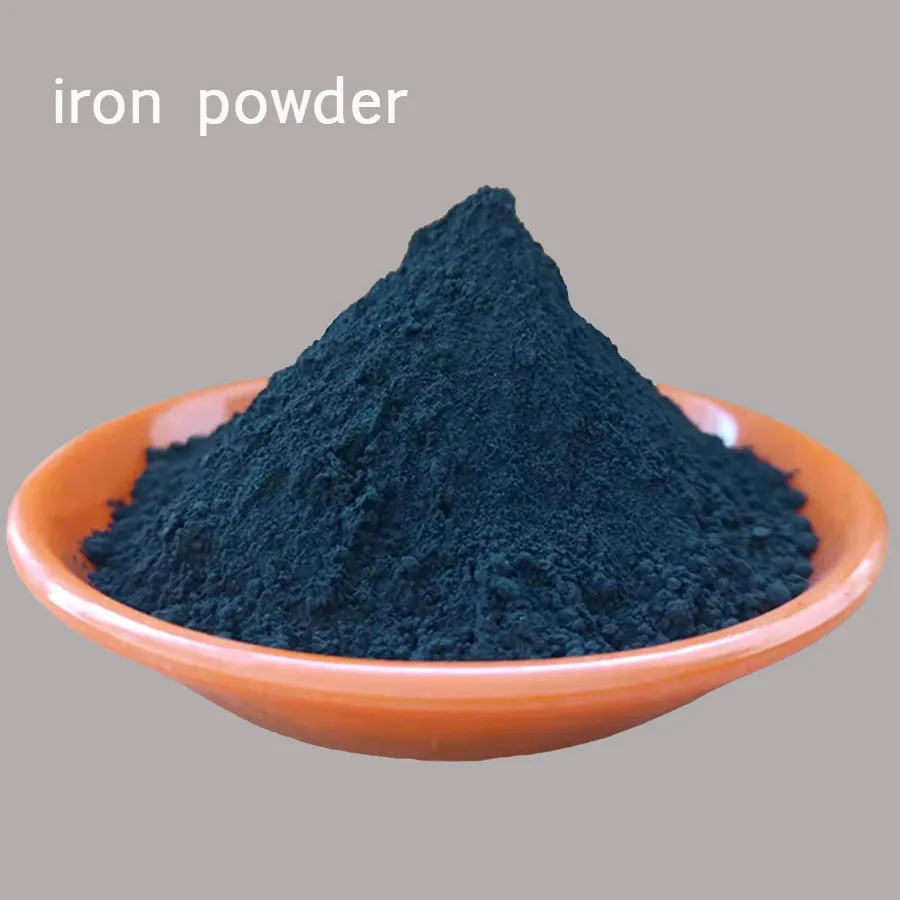
Table of Contents
- Iron Powder Overview
- Benefits & Use Cases of Iron Powder in Iron powder manufacturing
- Cost, Maintenance & User Experience
- Sustainability & Market Trends in manufacturing
- Conclusion on Iron Powder from Shijiazhuang Baifeng Mining Co.,Ltd
Iron Powder Overview
Iron powder is a finely divided form of elemental iron produced through reduction of iron oxides or by atomization. In the manufacturing value chain—especially the Black metal smelting and rolling processing industry—it serves as a high‑value feedstock for powder metallurgy (PM), welding consumables, steel deoxidation, magnetic components, and chemical reduction. For B2B buyers, the performance of iron powder hinges on core attributes such as particle size distribution (PSD), apparent density, flowability, compressibility, and controlled levels of oxygen and tramp elements. Typical industrial grades are engineered to deliver consistent pressing behavior, predictable sintering shrinkage, and clean melt behavior in steel operations.
Shijiazhuang Baifeng Mining Co.,Ltd supports these requirements with rigorous raw material selection and in‑process controls designed to stabilize PSD and chemistry across batches. Depending on the application, buyers can specify reduced or atomized iron powder in a range of sizes suited to compacting, additive manufacturing pre‑mixes, or metallurgical additions. Practical quality checkpoints often include laser PSD analysis, Hall flow rate, apparent density, and spectrochemical testing. In automotive PM components, for instance, a tightly controlled PSD helps improve die fill uniformity and dimensional repeatability; in steelmaking, clean iron powder accelerates deoxidation while minimizing slag volume. Baifeng’s role is to ensure consistent, production‑ready powder that integrates into your downstream workflow with minimal adjustment.
Benefits & Use Cases of 鉄粉 in Iron powder manufacturing
Across iron powder manufacturing and downstream processes, iron powder enables efficiency and quality improvements. In PM, it is compacted and sintered to form structural parts, gears, and bearings with near‑net shapes, reducing machining and scrap. In welding, it is blended into electrodes and fluxes to increase deposition rates and bead quality. In steel plants, iron powder functions as a reliable deoxidizer and carburizing aid for melt refining. It is also used in soft magnetic composites, friction materials, sintered filters, and as a reactive agent in chemical and environmental processes. When the powder’s flow and compressibility are optimized, press speeds and fill consistency improve, and sintered density is easier to control.
- Precision PSD and low impurity levels support superior mechanical properties in PM parts and cleaner steelmaking operations.
- Stable lot‑to‑lot chemistry simplifies process tuning and reduces the risk of variability in high‑volume production.
- Application‑ready options (e.g., tailored blends, lubricant additions, or moisture‑controlled packaging) streamline handling and storage.
Shijiazhuang Baifeng Mining Co.,Ltd brings domain expertise in aligning powder characteristics to end‑use requirements—whether you’re targeting higher green strength in compaction, cleaner melt behavior in converters, or specialty blends for friction and magnetic applications. Their technical support helps B2B teams translate quality requirements into powder specifications that are practical on the shop floor.
Cost, Maintenance & User Experience
For decision makers, the total cost of ownership (TCO) extends beyond the per‑ton price of iron powder. Production‑grade powder with consistent flow and apparent density can improve press utilization, reduce die wear, and lower scrap/rework. In steelmaking, clean powder helps reduce slag formation and shortens refining time, contributing to energy and flux savings. Moisture‑controlled, dust‑reduced packaging improves housekeeping and mitigates material loss. When these factors compound over thousands of tons, the ROI is often realized through higher throughput, lower maintenance, and more predictable quality, not just procurement savings.
Customers in the Black metal smelting and rolling processing industry typically value stable supply, technical traceability, and responsive support. Shijiazhuang Baifeng Mining Co.,Ltd focuses on batch consistency and documentation to simplify audits and vendor qualification. Users highlight smoother die filling in PM, fewer press interruptions tied to powder variability, and cleaner furnace runs when oxygen and volatile content are managed. For operations teams, those outcomes translate into reduced downtime and a steadier cadence from compaction through sintering or from charge make‑up through tapping.
Sustainability & Market Trends in manufacturing
Sustainability pressures and market dynamics are reshaping iron powder manufacturing. Near‑net‑shape PM routes reduce machining waste and can lower energy per finished part. Upstream, there is growing interest in responsible sourcing of iron oxides, recycling of iron‑rich by‑products, and process water recovery in atomization. Regulatory expectations around emissions, worker safety, and product stewardship are also rising, along with requests for documentation on restricted substances and lifecycle impacts. Meanwhile, the expansion of electrified vehicles and compact drive units sustains demand for high‑performance PM gears, soft magnetic materials, and precision components.
Shijiazhuang Baifeng Mining Co.,Ltd positions itself as a forward‑thinking partner by emphasizing process control, materials efficiency, and proactive compliance. From dust collection and closed‑loop water practices to careful management of additives and packaging, Baifeng aims to align quality with environmental responsibility. For B2B buyers, this means access to iron powder that supports both production KPIs and corporate sustainability goals—backed by traceability and technical support to meet evolving market and regulatory requirements.
Conclusion on Iron Powder from Shijiazhuang Baifeng Mining Co.,Ltd
Iron powder is an indispensable enabler for modern manufacturing, from black metal smelting and rolling to high‑precision PM parts. When quality, consistency, and throughput matter, Shijiazhuang Baifeng Mining Co.,Ltd delivers dependable powders tailored to your process and performance targets. Partnering with a reliable supplier simplifies operations, improves yields, and supports sustainability objectives. Ready to optimize your supply chain and production outcomes?
- Contact us: email: info@baifengkc.com
- Visit our website: https://www.baifengmining.com | Product page: 鉄粉
関連ニュース