- Afrikaans
- Albanian
- Arabic
- Belarusian
- Bengali
- Czech
- Danish
- Dutch
- English
- Finnish
- French
- Galician
- German
- Greek
- Hebrew
- Hungarian
- Indonesian
- irish
- Italian
- Japanese
- Javanese
- kazakh
- Khmer
- Rwandese
- Korean
- Kyrgyz
- Lao
- Latin
- Latvian
- Lithuanian
- Malay
- Maltese
- Mongolian
- Myanmar
- Norwegian
- Persian
- Polish
- Portuguese
- Romanian
- Russian
- Serbian
- Slovak
- Spanish
- Swedish
- Tagalog
- Thai
- Turkish
- Ukrainian
- Vietnamese
- Welsh
The polymer industry is in a constant state of innovation, driven by the pursuit of materials that are stronger, lighter, more durable, and more cost-effective. While advanced synthetic fillers exist, there is a growing renaissance in utilizing naturally occurring minerals to achieve these goals. Among these, potassium feldspar mineral is emerging as a highly effective and versatile functional filler. This article delves into the transformative role of high-purity potassium feldspar powder in enhancing polymer composites, offering manufacturers a unique combination of performance improvements and economic benefits.
Shijiazhuang Baifeng Mining Co., Ltd. stands at the forefront of supplying high-grade mineral fillers to global industries. Strategically located in Lingshou County, a key non-metal mineral hub in China, our company leverages extensive expertise and advanced processing technology, including Superfine Raymond Mills, to produce consistently superior mineral powders. With an annual output exceeding 200,000 tons and a commitment to being your best partner, we provide tailored potassium feldspar powder solutions. Our mission is to deliver mutual benefit by helping customers find the exact product specification they need, ensuring optimal performance in demanding applications such as polymer compounding.
Understanding the Foundation: What is Potassium Feldspar Mineral?
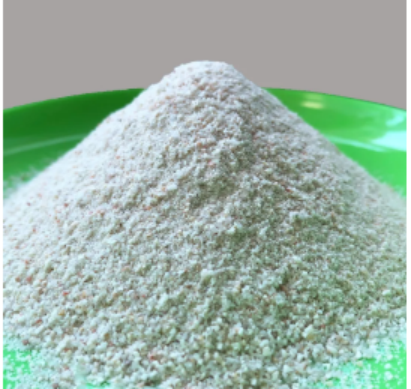
Potassium feldspar is not a novel material; it is one of the most abundant silicate minerals in the Earth's crust. Belonging to the feldspar group, it is primarily composed of potassium, aluminum, and silicate (KAlSi₃O₈). In its natural state, this potassium feldspar mineral is characterized by its hardness, chemical inertness, and distinctive cleavage. When processed and ground into a fine, consistent potassium feldspar powder, it transforms into a valuable industrial commodity. The inherent properties of the raw mineral—including its stable crystalline structure, high silica and alumina content, and favorable melting characteristics—are preserved and amplified in powder form. This makes it an excellent candidate for integration into various matrix materials, where it imparts its inherent strengths. The table below summarizes the key parameters of this essential material:
|
Property |
Description |
|
Chemical Composition |
Primarily potassium aluminum silicate (K₂O·Al₂O₃·6SiO₂). |
|
Crystal System |
Monoclinic (e.g., orthoclase). |
|
Common Colors |
Typically found in shades of red, pink, white, and grey. |
|
Key Characteristics |
Low melting point (approximately 1150°C ±20°C), long melting interval, and high melting viscosity. |
|
Mineral Varieties |
Includes orthoclase, microcline, and sanidine. |
The Functional Role of Potassium Feldspar Powder in Polymers
Incorporating potassium feldspar powder into polymer systems is a strategic move to engineer composite materials with enhanced properties. It acts as more than just a cheap volume extender; it is a functional filler that actively improves the composite's performance. The fine, plate-like or angular particles of the powder disperse within the polymer matrix, creating a reinforced network. This leads to a significant increase in stiffness (modulus) and dimensional stability, reducing shrinkage and warping in finished products. Furthermore, the inherent hardness and abrasion resistance of the potassium feldspar mineral translate directly into improved wear resistance for polymers, extending the lifespan of components subject to friction. Its thermal properties, derived from its high melting point and stability, can also enhance the heat deflection temperature (HDT) of certain polymer composites, allowing them to perform better in warmer environments. From thermoplastics like polypropylene and nylon to thermosets like epoxy and polyester, potassium feldspar powder provides a multifunctional boost.
Key Advantages of Using Potassium Feldspar Mineral as a Filler
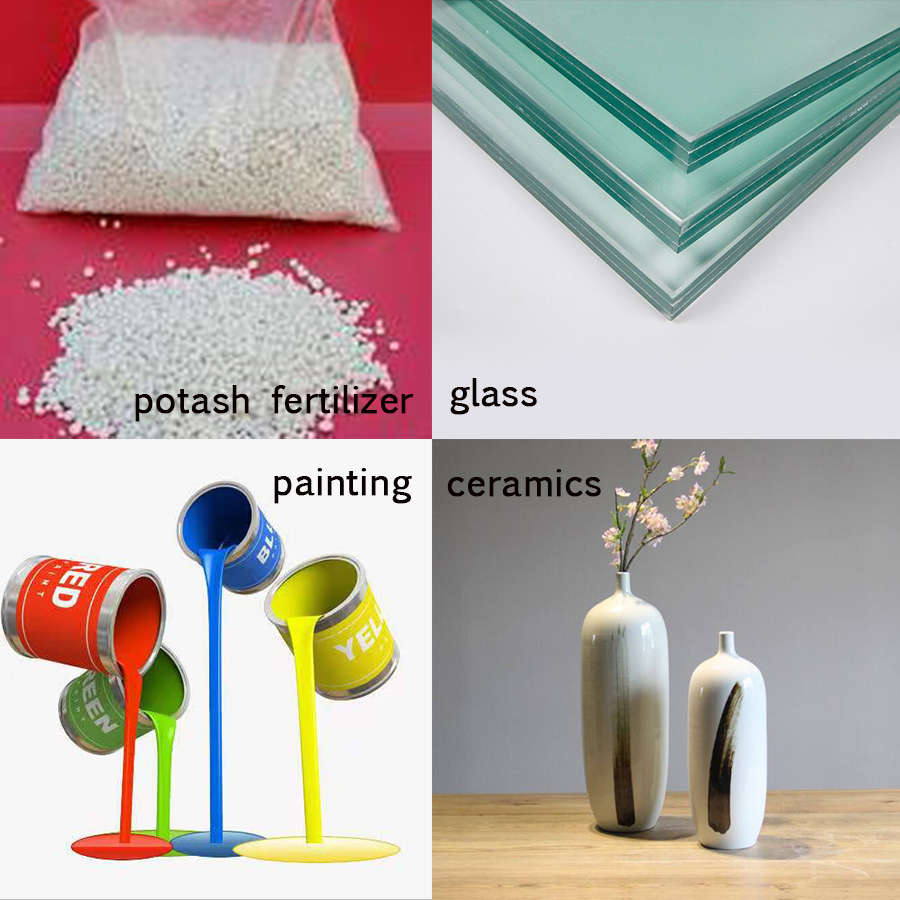
Choosing potassium feldspar mineral as a filler offers a compelling array of advantages for compounders and end-users. First and foremost is cost-performance optimization. It provides substantial reinforcement and property enhancement at a fraction of the cost of resin, lowering overall compound cost without sacrificing quality. Second is its excellent dispersion and processability. Our precisely milled potassium feldspar powder is engineered for consistent particle size distribution, ensuring smooth integration during mixing, extrusion, or injection molding without causing excessive equipment wear. Third, it contributes to improved surface finish. Compared to some other mineral fillers, it can yield a smoother, glossier surface on molded parts, which is critical for aesthetic applications. Fourth, its chemical inertness ensures compatibility with a wide range of polymers and additives, without interfering with other formulation chemistry. Finally, as a naturally sourced material, it offers a more sustainable profile compared to some synthetic alternatives, aligning with green manufacturing initiatives. These advantages make potassium feldspar powder a smart choice for applications ranging from automotive parts and appliance housings to industrial components and construction materials.
FAQs About Potassium Feldspar Powder for Polymers
What are the main advantages of potassium feldspar powder over other fillers?
The primary advantages of potassium feldspar powder lie in its balanced property package. It offers a unique combination of good stiffness enhancement, improved thermal stability, and excellent surface finish at a highly competitive cost. Unlike some fillers that heavily trade off impact strength for stiffness, properly sized potassium feldspar mineral can provide a favorable balance. Its natural chemical composition and particle morphology also contribute to better dispersion in the melt and lower moisture absorption compared to some alternatives, leading to more predictable processing and consistent final part performance.
How does the particle size of the powder affect polymer performance?
Particle size is a critical factor. Finer mesh potassium feldspar powder (e.g., 1250 mesh and above) offers superior surface finish and greater reinforcement efficiency due to higher surface area, making it ideal for thin-walled or high-detail injection molded parts. Coarser grades provide excellent dimensional stability and cost-saving bulk for larger extruded profiles or sheet goods. Our technical team can help you select the optimal particle size distribution for your specific polymer system and application to maximize properties like tensile strength, modulus, and impact resistance.
Can potassium feldspar mineral help reduce overall material costs?
Absolutely. This is one of its most significant benefits. Potassium feldspar powder acts as a high-performance extender, allowing you to increase the volume of your composite while reducing the percentage of more expensive polymer resin. This directly lowers compound cost per kilogram or per part. Importantly, this cost reduction does not equate to quality reduction; when used correctly, it enhances key physical properties, meaning you achieve cost savings while maintaining or even improving performance—a true win-win scenario for manufacturing efficiency.
Is potassium feldspar powder compatible with all types of polymers?
Potassium feldspar powder exhibits broad compatibility due to its chemical inertness and stable silicate structure. It is successfully used in a wide range of both thermoplastic (e.g., PP, PE, PA, PVC) and thermoset (e.g., epoxy, unsaturated polyester) systems. Compatibility is also influenced by surface treatment. We can provide untreated powder for standard applications or discuss surface modification options (such as silane coupling agents) to create an even stronger chemical bond between the potassium feldspar mineral particles and specific polymer matrices, thereby maximizing mechanical properties.
Why should we source our potassium feldspar powder from your company?
Sourcing from us means partnering with a dedicated specialist with full control over the supply chain—from raw potassium feldspar mineral selection to advanced milling and quality assurance. We guarantee batch-to-batch consistency, which is paramount for stable polymer processing. Our expertise allows us to provide customized solutions, tailoring powder specifications to your exact needs. Combined with our commitment to competitive pricing and reliable global logistics, we provide a total value package designed to make your polymer compounding more efficient, cost-effective, and successful.
関連ニュース