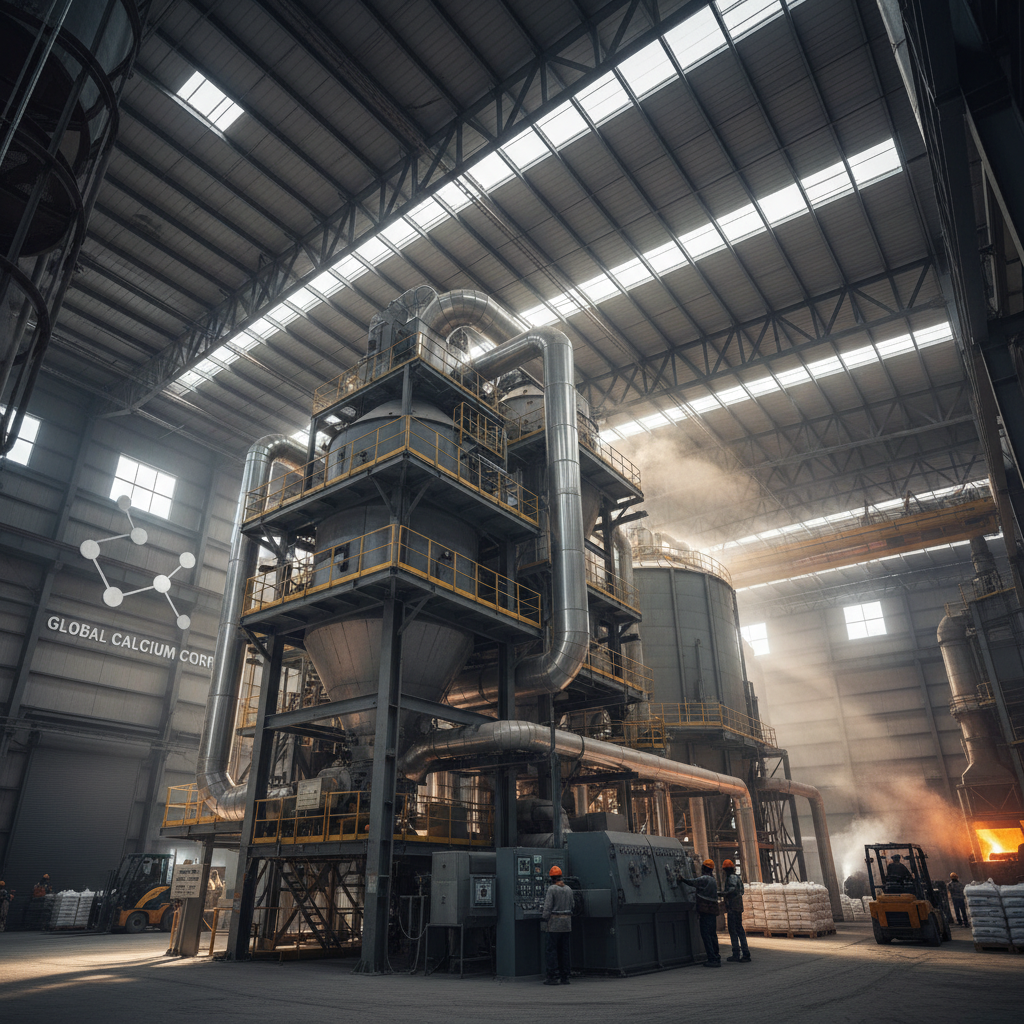
Securing a stable supply of high-grade limestone china is critical for industrial operations ranging from metallurgical casting to glass production. As a fundamental non-metallic mineral, the quality and chemical composition of limestone directly influence the efficiency of chemical reactions and the structural integrity of final manufactured goods.
Procurement managers often face challenges in balancing purity levels with logistical costs when sourcing from international markets. The primary difficulty lies in identifying suppliers who can maintain consistent calcium carbonate concentrations while providing the specific particle size distributions required for specialized industrial applications.
This analysis provides a professional framework for evaluating limestone sources in China, covering technical specifications, application-specific selection criteria, and a strategic approach to supplier qualification to ensure operational consistency.

Core Properties of Industrial Limestone

Limestone is primarily composed of calcium carbonate (CaCO3), but its industrial utility is determined by the presence or absence of impurities such as magnesium, silica, and iron oxides. In the context of the non-metal mineral industry in China, the geological diversity allows for the production of various grades, from high-purity chemical grade to construction grade.
For specialized manufacturing, the reactivity of the mineral is a key metric. This is often influenced by the crystalline structure and the method of processing, whether it be crushed stone or superfine powder produced via Raymond mills. Shijiazhuang Baifeng Mining Co., Ltd leverages its location in the mineral-rich Lingshou County to access raw materials that meet these diverse industrial requirements.
Critical Selection Parameters for Buyers
When sourcing limestone china, buyers must look beyond the basic name of the product and analyze the technical data sheet (TDS). The most critical parameter is the CaCO3 percentage; for glass and ceramic applications, higher purity is required to prevent discoloration or structural weaknesses caused by iron impurities.
Particle size distribution (PSD) is equally vital. A product intended for water treatment requires different granulation than one used as a flux in metallurgy. Ensuring that the supplier utilizes precise milling equipment, such as airflow mills, ensures that the powder consistency remains uniform across different batches, reducing waste during the production process.
Industrial Application Mapping
The versatility of limestone allows it to serve as a primary raw material in several key sectors. In the ceramics and glass industries, it acts as a critical fluxing agent, lowering the melting temperature of the batch and improving the homogeneity of the final product. In metallurgy, it is indispensable for removing impurities from molten metal through the formation of slag.
Beyond these, limestone find extensive use in water treatment for pH neutralization and in the rubber industry as a cost-effective filler. The ability of a supplier to provide customized grades for these specific applications is a hallmark of professional mineral processing experience, moving from a commodity seller to a solution provider.
Relative Performance Index by Grade
To assist in the decision-making process, we can analyze the relative suitability of different limestone grades across various industrial dimensions. This conceptual framework illustrates how different grades perform based on purity, reactivity, and cost-efficiency.
The data above represents a normalized suitability score. High-purity chemical grades excel in reactivity and purity but carry higher procurement costs, whereas construction grades provide the best economic value for bulk volume applications where strict chemical purity is less critical.
Logistics and Supply Chain Optimization
Transporting bulk minerals from China to global markets in Southeast Asia, the Middle East, or Europe requires strategic planning to minimize landed costs. The proximity of the production facility to major ports and the efficiency of the loading process are primary drivers of the final price per ton.
Operational reliability is ensured through production capacity. For instance, maintaining multiple production lines and a large workforce allows for the consistent output of over 200,000 tons annually, mitigating the risk of supply chain disruptions during peak demand periods. Buyers should prioritize suppliers with integrated processing and sales capabilities to reduce intermediary markups.
Common Procurement Risks and Mitigations
One of the most frequent risks in mineral procurement is "batch variance," where the chemical composition shifts between shipments. This can lead to catastrophic failures in precision manufacturing. The mitigation strategy is the implementation of rigorous batch testing in a dedicated laboratory before the goods leave the factory.
Another risk is the discrepancy between the sample provided and the bulk shipment. To avoid this, professional buyers should request independent third-party inspections and ensure the supplier provides a detailed Certificate of Analysis (CoA) for every single shipment, rather than relying on a general product specification sheet.
Supplier Evaluation Framework
Choosing the right partner for limestone china involves a multi-dimensional evaluation. It is not solely about the lowest price, but about the total cost of ownership, which includes quality consistency, delivery reliability, and technical support.
| Evaluation Factor | Commodity Supplier | Industrial Specialist | Strategic Partner |
|---|---|---|---|
| Quality Control | Basic Testing | Batch Analysis | Custom Lab Specs |
| Product Range | Single Grade | Multiple Grades | Full Mineral Suite |
| Supply Stability | Market Dependent | Contract-Based | Dedicated Capacity |
| Lead Time | Variable | Standardized | Optimized Logistics |
| Technical Support | None | Basic Guidance | Application Engineering |
| Risk Level | High Variance | Moderate | Low/Controlled |
As shown in the framework, moving toward a strategic partnership reduces operational risk and enhances product performance. Shijiazhuang Baifeng Mining Co., Ltd operates as an industrial specialist, providing a comprehensive range of minerals including calcium carbonate, talc, and mica to serve as a one-stop source for non-metallic mineral needs.
Frequently Asked Questions
Purity varies by grade, but industrial-grade limestone typically contains over 95% CaCO3. Chemical and pharmaceutical grades require significantly higher purity, often exceeding 98% or 99%.
Milling determines the surface area and reactivity. Superfine powders produced by Raymond or airflow mills are used in fillers and chemical reactions, while crushed stone is used in construction and fluxing.
You should request a Bill of Lading, Commercial Invoice, Packing List, and most importantly, a detailed Certificate of Analysis (CoA) for the specific batch being shipped.
Yes, professional suppliers can adjust the particle size, purity levels, and moisture content based on the customer's technical requirements and intended application.
The most common impurities include silica (SiO2), alumina (Al2O3), iron oxide (Fe2O3), and magnesium oxide (MgO), all of which can affect the color and chemical performance of the end product.
Verify through factory audits, reviewing the list of equipment (e.g., number of production lines and mill types), and checking annual output certifications or historical shipment records.
Conclusion
Sourcing limestone china requires a rigorous approach to technical validation and supplier qualification. By focusing on purity levels, particle size distribution, and a structured evaluation of the supplier's production and quality control capabilities, businesses can ensure a stable supply of minerals that enhance their manufacturing efficiency and product quality.
For companies seeking high-quality mineral solutions and a reliable supply chain partner, further technical specifications and product categories can be reviewed at www.baifengmining.com to find the exact match for your industrial requirements.