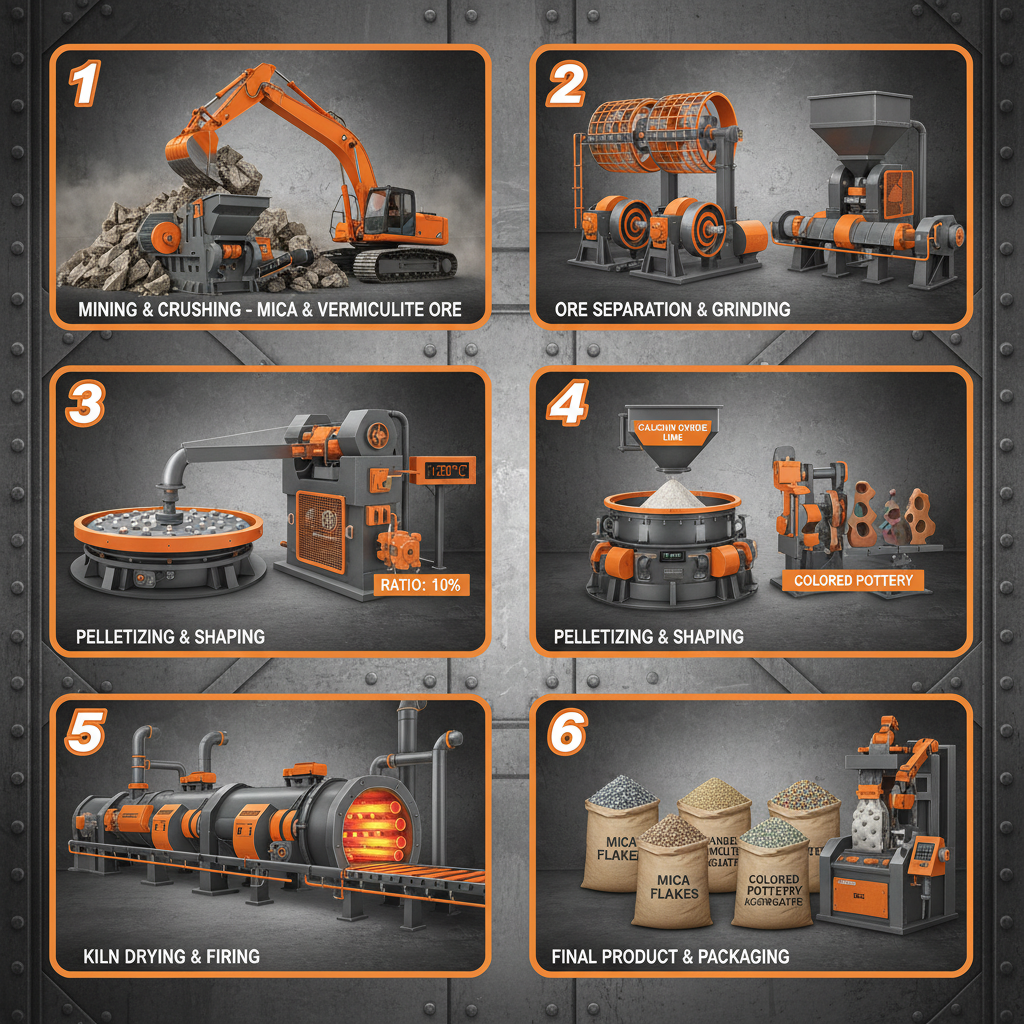
Identifying a reliable limestone supplier requires more than just comparing price lists; it demands an understanding of mineral purity, processing capabilities, and supply chain stability. In industrial applications ranging from metallurgical casting to glass production, the chemical consistency of calcium carbonate can determine the success or failure of a high-temperature reaction.
For procurement managers, the challenge lies in bridging the gap between raw geological potential and the strict specifications required by modern manufacturing. Whether the end-use is water treatment or refractory materials, the precision of the mineral processing—from crushing to superfine grinding—defines the product's operational efficiency.
This guide examines the critical evaluation metrics for sourcing non-metallic minerals and how integrated production facilities, such as those in China's primary mineral regions, manage the transition from quarry to industrial-grade powder.

The Strategic Role of Mineral Purity in Industrial Sourcing

The efficacy of industrial limestone is primarily governed by its calcium carbonate (CaCO3) content and the absence of deleterious impurities like silica or magnesium. When sourcing from a limestone supplier, the geological origin of the raw material is the first point of failure or success; minerals sourced from concentrated non-metal production areas typically offer higher homogeneity.
In the context of heavy manufacturing, inconsistent mineral purity leads to unpredictable thermal behavior in kilns and reactors. For instance, excessive moisture or unplanned mineral inclusions can cause structural defects in ceramic glazes or slagging issues in metallurgical casting, directly impacting the final product yield.
Professional mineral processing involves the use of specialized equipment, such as Rotary kilns and Airflow mills, to ensure that the raw limestone is not only purified but also sized precisely to meet the particle distribution requirements of the end-user.
Core Technical Indicators for Evaluating Calcium Carbonate Quality
Technical evaluation of a mineral supplier must move beyond the "grade" label and into specific physicochemical properties. Key metrics include the chemical composition analysis (XRF), particle size distribution (PSD), and whiteness index, which together determine the material's reactivity and aesthetic suitability.
The use of Superfine Raymond Mills allows for the production of powders with micron-level precision. This is critical for applications such as the production of high-grade plastics or rubber, where larger particles would create structural weak points or surface imperfections in the finished goods.
Furthermore, the stability of these parameters across different batches is what separates a commodity vendor from a strategic partner. A rigorous quality control laboratory is essential to verify that each shipment adheres to the agreed-upon technical data sheet (TDS).
Application Scenarios and Material Requirement Mapping
Limestone and its derivatives are utilized across a vast spectrum of industries, each with distinct purity and sizing needs. In the glass industry, high-purity carbonates are required to ensure transparency and prevent discoloration caused by iron oxide contaminants.
In the realm of water treatment, the focus shifts toward the neutralization capacity of the mineral. Here, the surface area of the powder—governed by the grinding process—directly impacts the speed and efficiency of the pH adjustment process in industrial wastewater streams.
Agricultural and gardening applications often require a balance between nutrient availability and soil structure improvement. In these cases, the supplier's ability to provide customized granulometry allows the end-user to control the release rate of minerals into the soil environment.
Analyzing Supply Reliability and Production Throughput
Supply chain resilience in the mining sector is measured by the integration of raw material access and processing capacity. A supplier located within a primary mineral production zone can mitigate logistics risks and maintain a more stable price point by reducing the distance from the quarry to the mill.
Production capacity, often measured in annual tonnage, indicates the supplier's ability to handle sudden spikes in demand without compromising quality. Facilities with multiple production lines can maintain a continuous flow of materials, which is vital for "just-in-time" manufacturing environments.
limestone supplier Performance Metrics
As illustrated in the performance comparison, integrated suppliers often show higher consistency in purity and faster lead times compared to trading entities that lack their own processing infrastructure and laboratory verification.
Procurement Framework for High-Volume Mineral Acquisition
Effective procurement of non-metallic minerals begins with a detailed specification sheet. Buyers must define not only the chemical purity but also the physical properties such as bulk density, moisture content, and the maximum allowable particle size.
Audit of the supplier's quality control process is the next critical step. A supplier with an internal lab capable of testing every batch ensures that the material arriving at the factory is the same as the sample provided during the evaluation phase.
Finally, logistical capabilities—including packaging options (Jumbo bags, 25kg bags) and shipping expertise to markets in Southeast Asia, Europe, or North America—must be verified to avoid costly delays at customs or during transit.
Innovations in Non-Metallic Mineral Processing Trends
The industry is moving toward "precision mining," where the focus is on reducing the energy footprint of grinding and improving the selectivity of mineral extraction. New airflow milling technologies are allowing for even finer powders with narrower particle size distributions, which is essential for advanced nano-composites.
Sustainability is also becoming a core procurement requirement. Suppliers who implement dust collection systems and energy-efficient rotary kilns are more likely to maintain long-term operational licenses and meet the ESG (Environmental, Social, and Governance) criteria of global corporations.
The integration of digital quality certificates, where lab results are linked to specific batch numbers via QR codes, is expected to become the standard for ensuring transparency and traceability in the mineral supply chain.
Comparative Analysis of Mineral Sourcing Models
Choosing between different sourcing models depends on the volume of requirement and the criticality of the material to the end-product. While trading companies offer a wide variety of products, direct manufacturers provide deeper technical support and better price stability.
The following table compares the primary dimensions of different supplier types to assist procurement teams in their selection process.
| Sourcing Model | Quality Control | Price Stability | Technical Customization |
|---|---|---|---|
| Direct Quarry Operator | Basic / Raw | Highest | Low |
| Integrated Processor | High / Lab-Verified | High | Very High |
| Regional Distributor | Variable | Medium | Medium |
| International Trader | Third-Party Based | Low | Low |
| Specialty Chemical Firm | Very High / Pure | Lowest | Extreme |
| Cooperative Mining Group | Standardized | Medium | Medium |
For enterprises requiring high-volume, consistent minerals, the Integrated Processor model—combining raw material access with advanced grinding technology—typically offers the best balance of ROI and risk mitigation.
Frequently Asked Questions
Conclusion
The selection of a limestone supplier is a technical decision that impacts the entire production chain. By focusing on integrated production capabilities, rigorous laboratory verification, and precise particle size control, manufacturers can ensure their operations remain stable and efficient.
Companies evaluating their mineral sourcing strategy can review a comprehensive range of non-metallic mineral solutions and technical specifications available through www.baifengmining.com to optimize their supply chain.