mineral manufacturers

News

  • home
  • NEWS
  • The Universal Identifier: Why CAS No 14807 96 6​ Matters

The Universal Identifier: Why CAS No 14807 96 6​ Matters
17 . Dec, 2025
In the global trade of chemicals and minerals, clarity is everything. The number cas no 14807 96 6​ is not just a code; it is the unique, international fingerprint for Talc. Assigned by the Chemical Abstracts Service (CAS), this CAS number​ eliminates all confusion. Talc may be known by various names or grades, but cas no 14807 96 6​ unequivocally refers to hydrated magnesium silicate with the chemical formula Mg₃Si₄O₁₀(OH)₂. This is critical for manufacturers, formulators, and safety officers. When you specify cas no 14807 96 6​ on a purchase order, safety data sheet (SDS), or technical specification, you guarantee that you are receiving genuine talc. It ensures regulatory compliance for shipping and handling, provides accurate information for hazard communication, and allows for precise quality control. Whether you're in plastics, cosmetics, or ceramics, using the correct cas no 14807 96 6​ is the first step in sourcing a consistent, high-quality material that forms the backbone of your formulation. It's the universal language of quality and safety in industrial supply chains.

Sourcing with Precision: The Importance of the CAS Number Talc
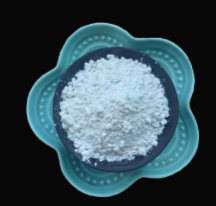
For procurement professionals and R&D teams, the cas number talc​ is an indispensable tool. It goes beyond simple identification. The cas number talc​ 14807-96-6 allows you to trace the material's properties, approved applications, and regulatory status worldwide. When evaluating suppliers, a legitimate one will always provide the cas number talc​ on all documentation, including the Certificate of Analysis (CoA). This CoA, linked to cas number talc​ 14807-96-6, details the specific batch's characteristics: its chemical composition, particle size distribution, brightness, and levels of any trace elements. This data is vital. For example, a paint manufacturer needs talc with specific opacity and oil absorption qualities, all verifiable through the CoA linked to the cas number talc. A cosmetics company requires an ultra-fine, high-brightness, and asbestos-free grade, which is confirmed through rigorous testing tied to that same cas number talc. By insisting on documentation centered on the correct cas number talc, you move from buying a generic powder to sourcing a precisely engineered functional filler that will perform predictably in your process, ensuring product consistency and performance batch after batch.The Universal Identifier: Why CAS No 14807 96 6​ Matters

Verified Quality: Understanding Talc 14807 96 6​ Specifications 


When you see a product listed as talc 14807 96 6, it represents talc that has been characterized and classified according to this universal standard. The specifications of talc 14807 96 6​ encompass its innate physical and chemical properties, which are what make it so valuable. As a hydrated magnesium silicate, talc 14807 96 6​ is chemically inert, hydrophobic (water-repellent), and organophilic (has an affinity for organic substances). Its platy, or layered, structure provides lubricity, reduces friction, and improves stiffness in composites. The key properties that define different grades of talc 14807 96 6​ include: Particle Size and Shape:​ Fine, platy particles offer better reinforcement and smoothness. Brightness:​ High brightness (whiteness) is crucial for plastics, paints, and coatings. Purity:​ The absence of impurities like carbonates, quartz, or, most critically, asbestos minerals, is verified for safe use. Suppliers provide data sheets for their specific grade of talc 14807 96 6, detailing these parameters. For instance, a talc 14807 96 6​ grade for polypropylene plastic will have a very fine, controlled particle size to maximize impact strength and heat resistance. Understanding the specifications behind the label talc 14807 96 6​ empowers you to select the exact grade that will deliver the desired functionality—be it as a reinforcing agent, an anti-blocking agent, a viscosity modifier, or an aesthetic enhancer.

The Key to Compliance and Safety: Using the Correct Talc CAS No​ 


In today's regulated manufacturing environment, using the correct talc cas no​ is a non-negotiable aspect of operational integrity. The talc cas no​ 14807-96-6 is the linchpin for all regulatory and safety documentation. Every Safety Data Sheet (SDS) for talc must be headed with this talc cas no. The SDS, governed by systems like GHS (Globally Harmonized System), outlines the hazards, handling precautions, first-aid measures, and disposal guidelines specific to the substance identified by talc cas no​ 14807-96-6. This ensures the safety of workers handling the material. Furthermore, regulatory bodies worldwide reference the talc cas no​ when setting approval guidelines for specific uses. For example, the use of talc (identified by its talc cas no) in food-contact polymers or cosmetics is subject to strict purity criteria. When a company claims its product is "talc-free" or uses "asbestos-free talc," these claims are substantiated through testing and certification linked to the substance's talc cas no. For importers and exporters, the talc cas no​ is essential for customs declarations and complying with international chemical inventories like TSCA in the USA or REACH in the EU. Simply put, the talc cas no​ transforms talc from a commodity into a traceable, accountable, and safely managed industrial input.


Sourcing high-quality talc that meets your exact specifications is fundamental to product performance. We specialize in providing premium talcum powder, the industrial product definitively identified as cas no 14807 96 6. Our talc is derived from high-grade mineral deposits and processed to exacting standards. The main component is hydrated magnesium silicate, processed through grinding, acid treatment, washing, and drying to achieve the desired characteristics: exceptional lubricity, fire resistance, acid resistance, electrical insulation, high melting point, chemical inertness, excellent covering power, softness, good gloss, and strong adsorption. Its unique layered crystalline structure makes it easy to split into plates, providing a special smoothness. We offer a range of grades tailored for diverse industries, each backed by full documentation specifying the talc cas number​ and complete analytical data. For the Chemical Industry, our talc acts as a reinforcing filler in rubber, plastics, and paints, enhancing dimensional stability and mechanical strength. In Ceramics, it is used for high-frequency porcelain and glazes, offering no discoloration at high temperatures and enhanced whiteness. For Cosmetics, we provide high-quality, safe filler grades. In Pharmaceuticals, we supply ultra-pure, inert additive grades. For Paper Manufacturing, our talc contributes to smooth, high-quality paper production. As a reliable partner, we ensure that every shipment of talc 14807 96 6​ not only meets but exceeds industry standards for purity, consistency, and performance.


Unlock the potential of talc in your formulations. Don't leave performance and consistency to chance. Whether you need a reliable filler, a reinforcing agent, or a functional additive identified by cas no 14807 96 6, partnering with a trusted supplier is the key to success.
Visit our website to explore our comprehensive range of talc products. Access detailed technical data sheets for each grade, all clearly linked to cas number talc​ 14807-96-6. Download Safety Data Sheets and request samples to test in your application. Our technical team is ready to help you select the optimal talc 14807 96 6​ grade based on your industry—be it plastics, paints, cosmetics, ceramics, or pharmaceuticals—and your specific performance requirements.
Choose a partner committed to quality, safety, and transparency. Ensure your supply chain is built on verified materials. Contact us today for a quote, and experience the difference that premium, fully documented talc can make for your business.

CAS Number Talc FAQs 


What is the CAS number talc, and why is it important? 


The CAS number talc​ is 14807-96-6. It is a unique numerical identifier assigned to the chemical substance talc (hydrated magnesium silicate). It is critically important for unambiguous identification in global trade, regulatory compliance, safety documentation (SDS), quality control, and scientific literature. It ensures everyone is referring to the exact same material.

Are all talc products the same since they share the talc cas no​ 14807-96-6? 


No. While all pure talc shares the talc cas no​ 14807-96-6, its functional properties vary greatly based on the ore source and processing. Key differences include particle size distribution (fineness), particle shape (platyness), brightness (whiteness), and chemical purity. Different grades are engineered for specific applications, such as a fine, high-brightness talc for cosmetics versus a coarse talc for ceramics.

Is talc safe to use? How does the talc cas number​ relate to safety? 


The safety of talc depends on its grade and application. Cosmetic- and pharmaceutical-grade talc, identified by its talc cas number, is highly purified and processed to be asbestos-free, making it safe for its intended uses. Industrial talc is safe when handled according to its Safety Data Sheet (SDS), which is always linked to the talc cas number. The talc cas number​ is the key to accessing the correct hazard and safety information.

I need asbestos-free talc. How can I be sure? 


Reputable suppliers provide a Certificate of Analysis (CoA) with each batch of talc, which is linked to the product's talc cas no. This CoA should include the results of rigorous testing for asbestos minerals, often using XRD (X-ray Diffraction) or TEM (Transmission Electron Microscopy). You should always request and review this documentation before purchase to ensure compliance with safety regulations for your industry.

Can you provide talc for food-contact applications? 
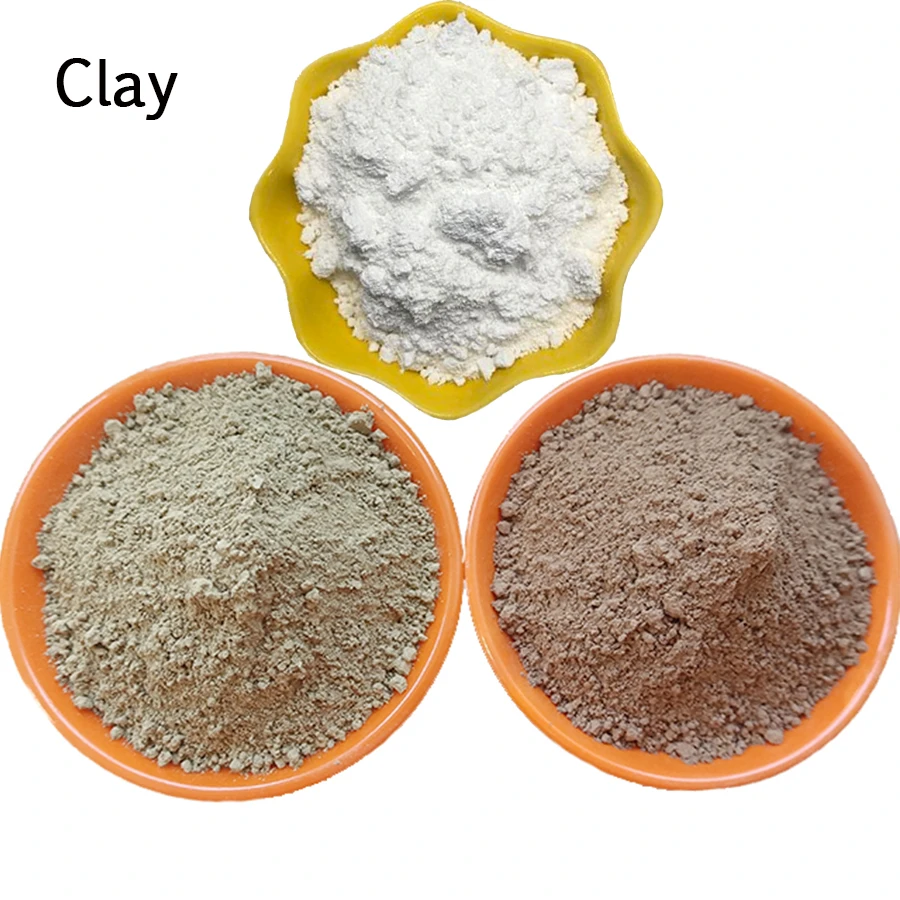
 

Yes, we supply talc grades that comply with relevant regulations for food-contact materials, such as those set by the FDA in the USA or EFSA in Europe. These grades are produced under strict controls to ensure high purity and the absence of contaminants. The suitability for food contact is verified through testing and certification, with all documentation referenced to the official talc cas number.
Copyright © 2026 Shijiazhuang Baifeng Mining Co.,Ltd All Rights Reserved. Sitemap | Privacy Policy | Top Blog
tel number
email
phone
back to top

If you are interested in our products, you can choose to leave your information here, and we will be in touch with you shortly.


-->