- Afrikaans
- Albanian
- Arabic
- Belarusian
- Bengali
- Czech
- Danish
- Dutch
- English
- Finnish
- French
- Galician
- German
- Greek
- Hebrew
- Hungarian
- Indonesian
- irish
- Italian
- Japanese
- Javanese
- kazakh
- Khmer
- Rwandese
- Korean
- Kyrgyz
- Lao
- Latin
- Latvian
- Lithuanian
- Malay
- Maltese
- Mongolian
- Myanmar
- Norwegian
- Persian
- Polish
- Portuguese
- Romanian
- Russian
- Serbian
- Slovak
- Spanish
- Swedish
- Tagalog
- Thai
- Turkish
- Ukrainian
- Vietnamese
- Welsh
In construction, the search for lightweight, durable, and eco-friendly materials has led to the rise of pumice sand—a volcanic mineral that transforms concrete, mortar, and plaster mixes with its unique porous structure. Shijiazhuang Baifeng Mining Co.,Ltd, situated in Lingshou County’s mineral-rich mountains (a top non-metal production hub in China), has specialized in processing high-quality volcanic minerals since 2008. With a 5,000-square-meter factory, 10 million RMB investment, 200 skilled employees, and 20 R&D quality control experts, the company delivers premium pumice, pumice stone, and pumice sand tailored for construction needs. As a trusted partner for wholesalers supplying construction firms, concrete plants, and building material distributors, Baifeng ensures consistent quality and scalable bulk supply—making its pumice solutions a top choice for large-scale projects. This article explores the key benefits of pumice sand in construction mixes and why Baifeng’s products excel for wholesale clients seeking performance, cost savings, and sustainability.
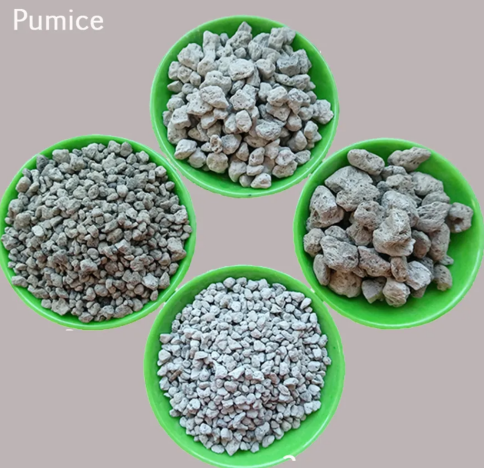
Lightweight Advantage of Pumice Sand in Concrete Mixes
- Reduced Structural Load & Material Costs: Pumice sand’s porous composition (70-80% void space) makes it 40-60% lighter than traditional river sand, significantly reducing the weight of concrete mixes. This lightweight property lowers structural load on buildings, allowing for slimmer support beams and reduced foundation costs—critical for high-rise construction or lightweight prefabricated panels. Baifeng’s pumice sand , processed to uniform particle sizes (0.15-5mm), mixes seamlessly with cement and aggregates, ensuring consistent strength despite the reduced weight. A wholesaler supplying Asian high-rise construction firms reported that Baifeng’s pumice sand helped clients cut concrete weight by 35%, translating to 12% lower foundation costs for large projects.
- Improved Thermal Insulation: Unlike dense river sand, pumice stone (the raw form of pumice sand) traps air within its pores, enhancing the thermal insulation of construction mixes. When used in wall plaster or concrete blocks, pumice sand reduces heat transfer, lowering building energy consumption for heating and cooling. Baifeng’s R&D team optimizes the porosity of pumice to balance insulation and strength, making it ideal for eco-friendly “green buildings.” A wholesaler serving European sustainable construction brands noted that pumice sand from Baifeng increased wall insulation efficiency by 25%, helping clients meet strict EU energy efficiency standards.
Product Specifications: Pumice for Construction Mixes
|
Product Category |
Baifeng Specifications |
Wholesale Value & Market Appeal |
Ideal Applications |
|
Pumice Sand (Fine Grade) |
Particle size: 0.15-2mm; bulk density: 500-700kg/m³; porosity: 75-80%; water absorption: 30-40%; pH: 7-8 (neutral) |
Lightweight concrete, wall plaster, tile adhesive; improves workability; reduces shrinkage |
Residential buildings, prefabricated panels, interior wall finishes |
|
Pumice Sand (Coarse Grade) |
Particle size: 2-5mm; bulk density: 600-800kg/m³; porosity: 70-75%; compressive strength: ≥3MPa; low impurity content |
Concrete blocks, road base mixes, lightweight aggregates; enhances drainage; reduces cracking |
Commercial construction, road construction, retaining walls |
|
Pumice Stone (Raw/Processed) |
Size: 5-20mm; bulk density: 700-900kg/m³; porosity: 65-70%; heat resistance: up to 800°C; durable in harsh weather |
Landscaping, drainage layers, high-temperature insulation; eco-friendly alternative to gravel |
Landscaping projects, roof drainage, industrial insulation applications |
Durability & Sustainability of Pumice in Construction
- Weather Resistance & Longevity: Pumice’s volcanic origin gives it inherent resistance to water, frost, and chemical erosion—unlike traditional sand that degrades over time in wet or salty environments. Baifeng’s pumice sand retains its structure for 50+ years, reducing the need for maintenance or replacement in outdoor construction (e.g., roads, retaining walls). A wholesaler supplying coastal construction firms in Southeast Asia reported that pumice sand-based concrete lasted 30% longer than river sand concrete in saltwater exposure, cutting long-term repair costs.
- Eco-Friendly Sourcing & Production: Pumice sand is a renewable resource (replenished by volcanic activity) and requires 50% less energy to process than crushed stone or synthetic aggregates. Baifeng’s mining and processing methods prioritize environmental protection—minimizing soil disturbance and recycling water used in washing pumice stone. For wholesalers targeting eco-conscious clients, this sustainability factor is a key selling point: pumice sand-based mixes reduce a project’s carbon footprint by 15-20% compared to traditional mixes. A wholesaler serving North American green building contractors noted that Baifeng’s pumice sand helped clients earn LEED credits, opening access to high-value sustainable construction projects.
Wholesale Advantages of Baifeng’s Pumice Products
- Strict Quality Control & Consistency: Baifeng’s 20 R&D quality control experts test every batch of pumice, pumice stone, and pumice sand for particle size, porosity, and strength—ensuring compliance with global construction standards (e.g., ASTM C33, EN 12620). The defect rate is below 0.3%, eliminating the risk of rejected shipments for wholesalers supplying large concrete plants. A wholesaler serving Middle Eastern construction firms reported that Baifeng’s quality consistency helped them retain 90% of clients, as projects avoided delays from substandard aggregates.
- Scalable Supply & Customization: Baifeng’s 5,000-square-meter factory produces 8,000+ tons of pumice sand monthly, supporting bulk wholesale orders (MOQs start at 200 tons). The R&D team also offers customization—adjusting particle size, porosity, or drying level to match specific mix requirements (e.g., ultra-fine pumice sand for high-workability plaster). A wholesaler supplying European prefabricated panel manufacturers noted that custom pumice sand from Baifeng optimized their clients’ production lines, increasing panel output by 10%.
Pumice Sand FAQS
How Does Pumice Sand Compare to River Sand in Concrete Strength?
Baifeng’s pumice sand matches or exceeds river sand in strength for most applications: while river sand concrete has a compressive strength of 20-30MPa, pumice sand-based concrete (with proper mix design) reaches 18-28MPa—sufficient for residential, commercial, and light industrial projects. For high-strength needs (e.g., bridges), Baifeng offers a “high-density pumice sand” variant (bulk density 800-900kg/m³) that achieves 30+MPa. A wholesaler supplying Chinese concrete plants reported that pumice sand-based concrete met all local strength standards, with clients reporting no performance differences from river sand mixes.
Can Pumice Sand Be Used in Wet Construction Environments?
Yes—pumice sand’s porous structure actually improves water drainage in wet environments (e.g., basement floors, retaining walls). Unlike river sand that can become waterlogged and lose strength, pumice sand drains excess water while retaining structural integrity. Baifeng’s pumice stone-derived sand also resists frost heaving (a common issue with traditional aggregates in cold climates) because trapped air in its pores buffers against freezing expansion. A wholesaler serving Northern European construction firms noted that pumice sand was their top-selling aggregate for winter construction, as it reduced frost damage by 40%.
What Particle Size of Pumice Sand Is Best for Different Construction Mixes?
Baifeng recommends tailored sizes: 1) Fine pumice sand (0.15-2mm) for plaster, tile adhesive, and lightweight concrete (needs workability); 2) Coarse pumice sand (2-5mm) for concrete blocks, road base, and drainage layers (needs strength and drainage); 3) Pumice stone (5-20mm) for landscaping and industrial insulation. Wholesalers can consult Baifeng’s R&D team to match sizes to client mixes—no extra cost for adjustments on bulk orders. A wholesaler supplying Indian construction distributors reported that this customization helped clients serve diverse project needs, increasing their market share by 15%.
Is Pumice Sand Resistant to Chemicals in Construction Materials?
Absolutely—pumice sand is chemically inert and resistant to cement alkalis, fertilizers, and industrial chemicals. It does not react with cement, lime, or admixtures, ensuring long-term stability of the mix. Unlike limestone aggregates that can degrade in acidic environments, pumice sand maintains its structure in pH levels of 4-11, making it ideal for industrial floors or chemical plants. A wholesaler serving chemical facility contractors in Southeast Asia reported that pumice sand-based floors lasted 20+ years without degradation, outperforming limestone-based floors that needed replacement every 10 years.
What Support Do You Provide Wholesalers for Pumice Sand Orders?
Baifeng offers end-to-end support: 1) Free samples (with test reports on strength and porosity) for client validation; 2) Flexible delivery (bulk trucks, containers, or bags); 3) Custom documentation (certificates of analysis, export permits) for global shipping; 4) Post-sales technical support (helping clients optimize mix designs with pumice sand). A wholesaler supplying African construction firms reported that Baifeng’s logistics support simplified cross-border shipping, cutting delivery time by 25% and reducing customs delays. To explore our full range of pumice products or request a sample, visit our company webpage today!
Related News