Understanding the calcium oxide boiling point is fundamental for engineers and materials scientists operating in high-temperature industrial environments. Calcium oxide, commonly known as quicklime, possesses extreme thermal stability, making its phase transitions a critical point of study for those managing smelting, refining, and chemical synthesis processes where thermal thresholds determine the success of a reaction.
On a global scale, the precision with which we monitor the calcium oxide boiling point affects the efficiency of carbon capture technologies and the production of high-grade refractory materials. Because this substance is used in everything from steel manufacturing to environmental remediation, a deep technical grasp of its thermal limits ensures operational safety and prevents catastrophic equipment failure in extreme heat scenarios.
By analyzing the thermodynamics surrounding the calcium oxide boiling point, industries can optimize energy consumption and reduce the carbon footprint of mineral processing. This guide provides a comprehensive exploration of the thermal properties of CaO, bridging the gap between theoretical chemistry and practical industrial application in the non-metallic mineral sector.
Thermal Properties and Calcium Oxide Boiling Point
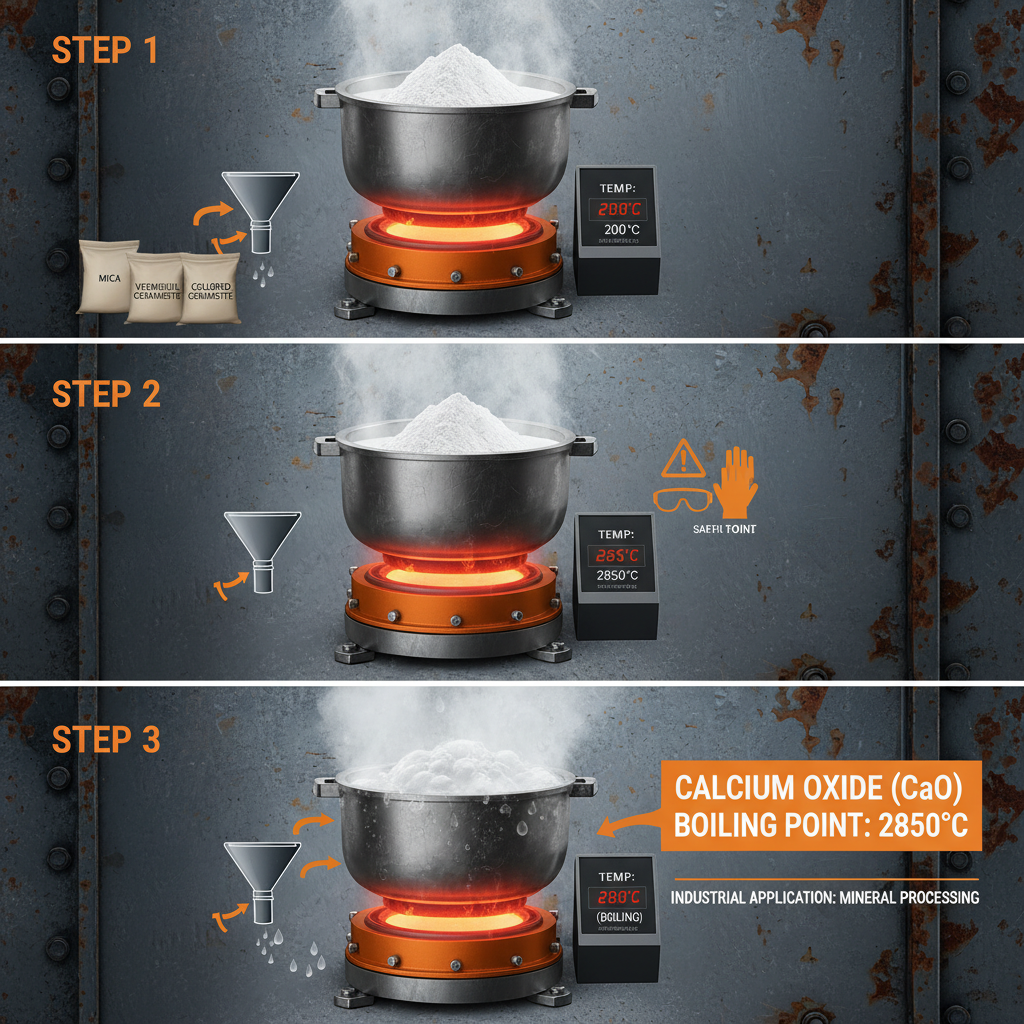
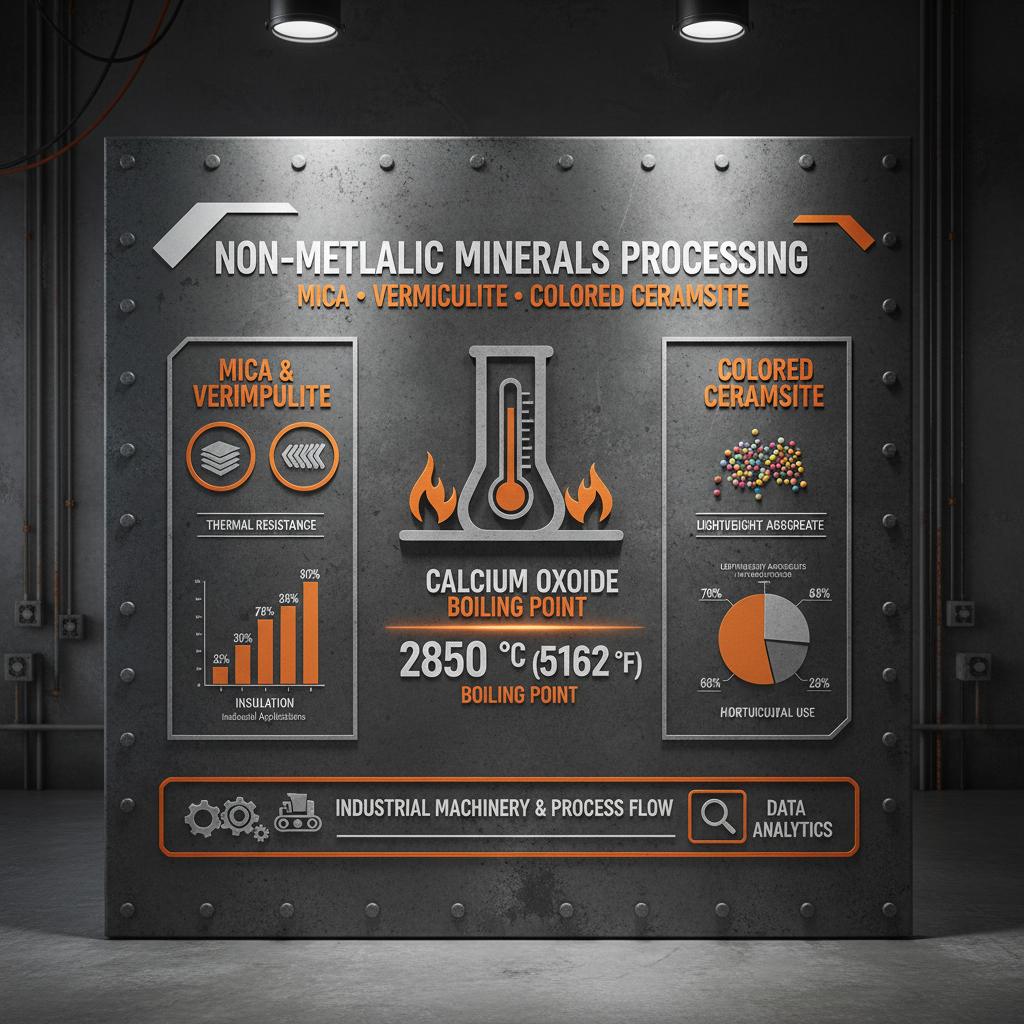
The calcium oxide boiling point is an extraordinary metric, reflecting the immense strength of the ionic bonds between calcium and oxygen atoms. In practical terms, the boiling point of CaO is exceptionally high, typically cited around 2,862°C (5,184°F), which places it among the most thermally resilient oxides known to man. This property allows it to remain in a stable liquid or solid state long after other industrial materials have vaporized.
From a metallurgical perspective, understanding this threshold is not just about the point of evaporation, but about the behavior of the material as it approaches this limit. The heat capacity and thermal conductivity of the substance change as it nears the calcium oxide boiling point, influencing how heat is distributed across a furnace lining or a chemical reactor.
The Role of CaO in Industrial Heat Management
In the realm of non-metallic mineral processing, the stability associated with the calcium oxide boiling point makes it an indispensable component for heat shielding. When used in the construction of kilns or blast furnaces, the high boiling threshold ensures that the material does not volatilize, which would otherwise lead to structural porosity and eventual collapse of the furnace walls.
Moreover, the ability of calcium oxide to withstand temperatures that would melt most metals is leveraged in the production of specialized glass and ceramics. By maintaining a stable phase far below the calcium oxide boiling point, manufacturers can achieve precise viscosity control in molten batches, ensuring a high-quality, bubble-free final product.
Beyond manufacturing, the thermal resilience of this oxide plays a role in environmental protection. In waste-to-energy plants, calcium oxide is used to scrub acidic gases; the fact that its boiling point is so distant from operating temperatures means the scrubbing agent remains physically stable and chemically active throughout the entire purification cycle.
Thermodynamic Stability of Calcium Oxide
The thermodynamic profile of the calcium oxide boiling point is governed by the lattice energy of the crystal structure. Because CaO forms a rock-salt structure with high electrostatic attraction, the energy required to break these bonds and transition the material into a gaseous phase is immense.
Crucially, the calcium oxide boiling point is not a static number but can be influenced by partial pressure and the presence of impurities. In high-vacuum environments, the effective temperature at which vaporization occurs may drop, a factor that precision engineers must account for when designing aerospace components or vacuum-sealed crucibles.
Analyzing the relationship between the melting point and the calcium oxide boiling point provides insight into the liquid range of the material. This liquid phase is vital for the sintering process in refractory brick manufacturing, where controlled heating allows particles to fuse without reaching the point of vaporization.
Comparative Analysis of Boiling Thresholds
When comparing the calcium oxide boiling point to other alkali earth oxides, it becomes evident why CaO is preferred for extreme heat applications. While oxides like Magnesium Oxide (MgO) also exhibit high thermal limits, the cost-to-performance ratio of Calcium Oxide makes it the primary choice for large-scale industrial linings.
The gap between the melting point and the calcium oxide boiling point defines the operational window for molten slag chemistry. In steelmaking, controlling this window is essential for the efficient removal of impurities like phosphorus and sulfur from the molten metal.
Comparison of Thermal Stability Indicators
Global Applications in Refractory Materials
Across the globe, from the industrial hubs of China to the steel mills of Germany, the calcium oxide boiling point serves as a benchmark for creating "super-refractories." These materials are engineered to withstand the caustic environment of molten glass and steel without degrading or evaporating into the atmosphere.
In remote industrial zones where extreme temperature fluctuations are common, the reliability of CaO-based materials is paramount. Their ability to stay chemically inert up to a significant fraction of the calcium oxide boiling point ensures that critical infrastructure remains safe and functional for decades, reducing the need for costly frequent replacements.
Overcoming Challenges in High-Temp Processing
Despite the advantage of a high calcium oxide boiling point, practical application is often hindered by the material's affinity for water (hydration). When CaO absorbs moisture, it expands and can crack the very structures designed to utilize its thermal stability, creating a paradox where the most heat-resistant material is also the most sensitive to humidity.
To solve this, modern mineralogy focuses on creating composite materials that encapsulate the oxide. By blending CaO with other silicates, engineers can maintain the benefits of the calcium oxide boiling point while adding a protective barrier against atmospheric moisture and chemical corrosion.
Furthermore, the energy required to reach temperatures approaching the calcium oxide boiling point is immense. The current industry trend is to utilize microwave-assisted sintering and plasma heating, which allow for localized heating of the material without requiring the entire furnace to reach these extreme levels.
Future Innovations in Oxide Thermal Research
The future of thermal research is leaning toward "nano-structured" oxides. By manipulating calcium oxide at the atomic level, scientists hope to further enhance the perceived calcium oxide boiling point stability, creating materials that can withstand even higher pressures and temperatures for next-generation nuclear fusion reactors.
Digital transformation is also playing a role, with AI-driven simulations now predicting how the calcium oxide boiling point fluctuates when doped with rare earth elements. This allows for the creation of "tailored oxides" that have specific boiling and melting points customized for a particular industrial process.
Sustainability remains the final frontier. Research is currently focused on capturing CO2 and converting it back into calcium carbonate, which can then be calcined to produce CaO. This circular economy approach ensures that the utilization of the calcium oxide boiling point in industry does not come at the expense of the planet.
Summary of Thermal Performance and Industrial Utility
| Application Area |
Thermal Requirement |
Stability Score (1-10) |
Boiling Point Impact |
| Steel Blast Furnace |
Extreme High |
10 |
Prevents volatilization |
| Glass Melting |
High |
9 |
Maintains viscosity |
| Carbon Capture |
Moderate to High |
8 |
Ensures cycle longevity |
| Ceramic Sintering |
High |
9 |
Controls phase change |
| Aerospace Shielding |
Extreme High |
7 |
Resists atmospheric re-entry |
| Waste Incineration |
Moderate |
10 |
Stable gas absorption |
FAQS
The boiling point of calcium oxide (CaO) is approximately 2,862°C (5,184°F). This extremely high value is due to the strong ionic bonding between the calcium and oxygen ions, which requires a massive amount of thermal energy to overcome and transition the substance into a gaseous state.
Engineers use the calcium oxide boiling point to determine the maximum safe operating temperature of refractory linings. Since CaO does not vaporize at typical industrial temperatures, it prevents the lining from becoming porous or thinning over time, ensuring the furnace remains structurally sound and energy-efficient.
Yes, impurities can act as "fluxes," lowering the effective temperature at which the material begins to volatilize or melt. High-purity calcium oxide will strictly adhere to the theoretical boiling point, whereas industrial-grade lime may exhibit slightly different thermal behaviors depending on the silicate or aluminate content.
Both have exceptionally high boiling points. MgO often has a slightly higher melting point, but CaO is more cost-effective and offers superior chemical reactivity for applications like steel slagging and gas scrubbing, making it the preferred choice for most large-scale industrial applications.
Reaching the calcium oxide boiling point requires specialized high-temperature equipment, such as plasma torches or electric arc furnaces. Standard laboratory ovens cannot reach the 2,800°C+ required to vaporize CaO, which is why most research focuses on its behavior during melting and sintering.
Like most substances, the boiling point is pressure-dependent. In a vacuum, the boiling point of calcium oxide decreases, which can lead to premature vaporization in high-vacuum industrial processes. Conversely, under extreme pressure, the thermal stability is further enhanced.
Conclusion
The calcium oxide boiling point is more than just a chemical constant; it is a pillar of modern high-temperature engineering. From ensuring the structural integrity of blast furnaces to enabling the next generation of carbon capture technologies, the thermal stability of CaO allows industries to push the boundaries of what is possible in materials science. By understanding the nuances of its phase transitions, we can optimize industrial efficiency and safety.
Looking forward, the integration of AI-driven material design and sustainable production methods will likely uncover new ways to leverage the properties of the calcium oxide boiling point. As we transition toward a greener industrial future, the role of stable, high-temperature oxides will only grow in importance. For high-quality mineral solutions and technical expertise, we invite you to explore our offerings. Visit our website: www.baifengmining.com